
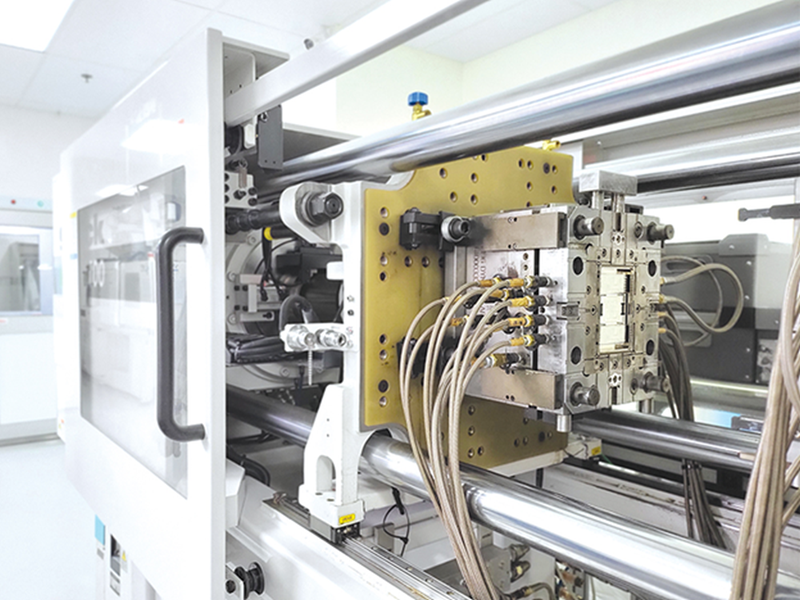
Singapore does not have an abundance of natural resources, cheap land, or low labour costs. What it has is institutional discipline, engineering talent concentrated by decades of investment in technical education, and a manufacturing culture that treats precision as a baseline expectation rather than a premium offering. These characteristics made Singapore an unusual choice for advanced manufacturing forty years ago and make it an obvious one today. The industries that have located precision manufacturing in Singapore, aerospace, semiconductors, medical devices, defence, did so because the capabilities here match the demands of their products in a way that is difficult to replicate elsewhere in the region.
Metal injection moulding sits comfortably within this manufacturing tradition. The process demands tight control of feed stock composition, moulding parameters, debinding conditions, and sintering profiles. Small deviations at any stage produce dimensional, density, or mechanical property outcomes that fall outside the specification. Singapore’s manufacturing culture, with its emphasis on process discipline, documented quality systems, and skilled technical workforce, provides the operating environment that MIM requires to deliver consistently at the quality level precision industries demand.
Metal injection molding companies in Singapore combine this environment with the specific technical capability required to produce complex metal components for the world’s most demanding industrial applications.
What MIM Actually Does That Other Processes Cannot
Every manufacturing process makes trade-offs. Machining from bar stock produces excellent dimensional accuracy and surface finish but generates significant material waste and has diminishing returns on cost as component complexity increases. Die casting produces complex shapes at high volume but is limited to lower-melting-point alloys and produces parts with porosity levels that restrict their use in high-stress applications. Casting in general offers geometric freedom but limited dimensional accuracy without secondary machining. Powder metallurgy produces near-net shapes in a wide alloy range but has geometric limitations for truly three-dimensional complex forms.
MIM occupies a space that none of these processes reach alone, complex three-dimensional geometry, in alloys across the full engineering range including stainless steels, tool steels, titanium, and nickel superalloys, at near-full density, in production quantities that make the tooling investment cost-effective. The sintering process consolidates the powder compact to densities typically above 95 percent of the theoretical maximum, producing mechanical properties that approach those of wrought material rather than the reduced properties characteristic of porous sintered parts.
Metal injection molding companies in Singapore that have developed their MIM capability across multiple alloy families and application sectors can draw on this breadth of experience when a new component presents requirements that sit at the boundary of what the process can achieve.
Feedstock and Alloy Capability
The feedstock is where a MIM company’s alloy capability lives. MIM feedstock consists of fine metal powder, typically with a particle size below 22 microns, combined with a thermoplastic or wax-polymer binder system in proportions and with mixing conditions that produce a uniform, injectable compound. The feedstock formulation for each alloy is developed and qualified independently, because the powder characteristics, the binder-powder interaction, and the debinding and sintering conditions all vary with the alloy system.
A MIM company with a narrow feedstock portfolio can produce components in a limited alloy range. One with a broad feedstock development programme can offer alloy selection based on the application’s actual requirements rather than the supplier’s production convenience. For applications requiring 316L stainless for corrosion resistance, 17-4 PH for high strength combined with corrosion resistance, M2 tool steel for hardness, or titanium for biocompatibility with low density, the breadth of the MIM company’s alloy capability determines whether the optimal material can be used.
AMT’s feedstock development programme covers the alloy systems most frequently required in the medical, aerospace, and industrial precision sectors served from Singapore.
Tooling as the Gateway to Production Quality
A MIM tool is a precision artefact. The cavity dimensions define the moulded part geometry, with tolerances on the tool features calculated to produce the specified finished part dimensions after the shrinkage that occurs during debinding and sintering. Sintering shrinkage in MIM is typically 15 to 20 percent in each linear dimension, depending on the alloy and feedstock system, and the tool must compensate for this shrinkage to produce a finished part that meets the dimensional specification.
Calculating and verifying the shrinkage compensation is one of the technically demanding aspects of MIM tool design. Shrinkage is not perfectly uniform across complex geometries: features in different orientations and with different thermal mass shrink at slightly different rates. Experienced MIM toolmakers account for these non-uniformities in the tool design, producing tools that generate consistent finished part dimensions across complex three-dimensional geometries.
Tool qualification confirms that the tool produces parts within the specified dimensional window across the expected range of process variation. For high-volume MIM production, multi-cavity tools increase output per cycle, and cavity-to-cavity dimensional consistency must be verified during tool qualification.
Quality Systems for Precision Industry Customers
The customers who specify MIM components for precision applications do not accept verbal assurances of quality. They require documented evidence, calibrated measurement records, process control data, material traceability, and a quality management system that is independently certified to the standard applicable in their industry.
For medical device customers, ISO 13485 certification is the baseline requirement. For aerospace customers, AS9100 alignment is expected. For customers supplying regulated industries without a specific quality system standard, ISO 9001 provides the foundation. Each of these frameworks requires documented procedures, calibrated measurement systems, controlled records, and management oversight of the quality system’s performance.
Singapore’s Location Advantage for Regional Supply
For precision component customers located across Asia-Pacific, Singapore’s geographic position provides supply chain advantages that complement its manufacturing capability. Air freight from Singapore reaches most major Asia-Pacific manufacturing centres within hours. Sea freight connections support cost-effective supply of higher-volume programmes. Singapore’s free trade agreements reduce tariff friction on component exports to key markets including the United States, the European Union, and the ASEAN region.
For metal injection molding companies in Singapore serving international customers, this logistics infrastructure means that the precision manufacturing capability available in Singapore is accessible to customers regardless of where their own production operations are located.
AMT’s customer base spans medical device OEMs, aerospace prime contractors, and industrial equipment manufacturers across Asia-Pacific, Europe, and North America who source precision MIM components from Singapore for programmes where component quality and supply reliability are non-negotiable requirements.
For companies seeking precision MIM component manufacturers in Singapore with broad alloy capability, certified quality management systems, and the engineering depth to support complex component programmes from tooling development through to series production, AMT provides the metal injection moulding manufacturing capability that Singapore’s precision manufacturing tradition delivers.
